FLUENCY REDEFINED: WHAT IT REALLY MEANS
If you are here, it means fluency matters to you and you want a clearer, more grounded way to think about it.
Consider this your starting point before you explore the rest of the page!
WHY WE NEED TO REDEFINE FLUENCY?
Fluency isn’t a finish line. It’s how you live your languages!
It’s the way you move through those languages you're learning, how you USE them.
It’s lived, not "performed".
And it’s definitely not about sounding perfect.
Most learners are working toward someone else’s idea of fluency, which is why they end up overwhelmed, stuck, or restarting again.
My goal is to help you reconnect with what fluency can look like for your real life, your identity, and your goals.
This is not about giving you my definition. It is about giving you the truth of fluency so you can build a version that actually fits you.

THE PROBLEM WITH "TRADITIONAL" FLUENCY
The popular idea of fluency sounds impressive, but it rarely reflects how humans actually use languages. It demands:
-
Perfect recall of everything you've learned
-
Native level accuracy 100% of the time
-
Zero hesitation or forgetting
-
Constant performance and "showing off"
- Measure progress by apps, streaks, or levels.
This version creates pressure, shame, and the feeling that nothing you do counts unless it is flawless.
It leads to overwhelm, burnout, and endless restarting.
Traditional fluency puts the spotlight on what you cannot do instead of what you can already do.
And it often leads to:
- Endless studying with no sense of direction
- Fear of mistakes
- Comparing yourself to native speakers
- Feeling behind even when you’re learning
This is why so many learners freeze, overthink, or feel like their progress “doesn’t count.”
Fluency grows from using the languages you're learning in real moments, not chasing some perfect version of yourself!
A NEW DEFINITION OF FLUENCY?
Fluency is not a single skill.
It is a collection of lived skills that show up in different ways depending on your experience, your strengths, and the situations you are in.
Real fluency includes:
-
Understanding the message even when you miss details
-
Expressing ideas with the words you already know
-
Recovering when you do not know a word
-
Thinking in your target languages
-
Interacting in real situations with curiosity
-
Communicating meaning, not perfection
- Using your languages in the ways that matter to you
This isn't a list of optional or lesser versions of fluency.
THIS is fluency.
Your fluency does not need to match a native speaker to be valid. It needs to match your life and how YOU want to use those languages.
HOW TO NOTICE YOUR REAL FLUENCY SKILLS
You probably already have more fluency than you give yourself credit for.
Look for moments like these:
-
You understand the gist of a video, even with missing vocabulary
-
You can figure out meaning from context
-
You reword a sentence to get your point across
-
You have thoughts in your target languages during your day
-
You can follow a conversation flow
-
You stay engaged even when you feel unsure
- These are everyday signs of fluency, and they deserve to be recognize

HOW TO DEFINE FLUENCY FOR YOURSELF
Once you stop chasing the impossible version, you can build a definition that feels empowering instead of intimidating. Here is how you do that:
-
Decide what fluency means for your life
Ask yourself what you want to do with your languages. Not what the internet says. Not what a textbook says. What you want. -
Choose the skills that matter most to you
Reading comfortably. Holding simple conversations. Watching shows. Writing short messages. Pick what feels aligned with your real goals. -
Pay attention to your growth
Track the moments that reflect your ability to use your languages, not just the moments that feel difficult. -
Build fluency around your strengths
Your learning style, identity, and energy matter. Fluency should support you, not drain you.
You get to define fluency.
You get to own it.
You get to shape a version that matches the life you are building.
REDEFINING FLUENCY SERIES
This 5 part series breaks down how fluency actually works and how you can measure it in ways that feel real and encouraging (so you actually stay consistent and make more progress).
Your Next Step
Choose the support that helps you continue your version of fluency.
DISCOVER YOUR INNER POWER
Take the quiz to learn your natural learning strengths and how to use them to build real fluency.

FIND YOUR FOCUS
Get clear on one direction for your studies and create habits that match your real life and energy.
UNDERSTAND YOUR ENERGY
Get a clear picture of where your time and energy go so you can study with intention instead of guessing.
Fluency is not about sounding native.
It is about sounding like YOU.
When your definition matches your identity and your life, everything becomes easier.
Progress feels real.
Study time feels lighter. The languages you're learning become something you live, not something you chase.
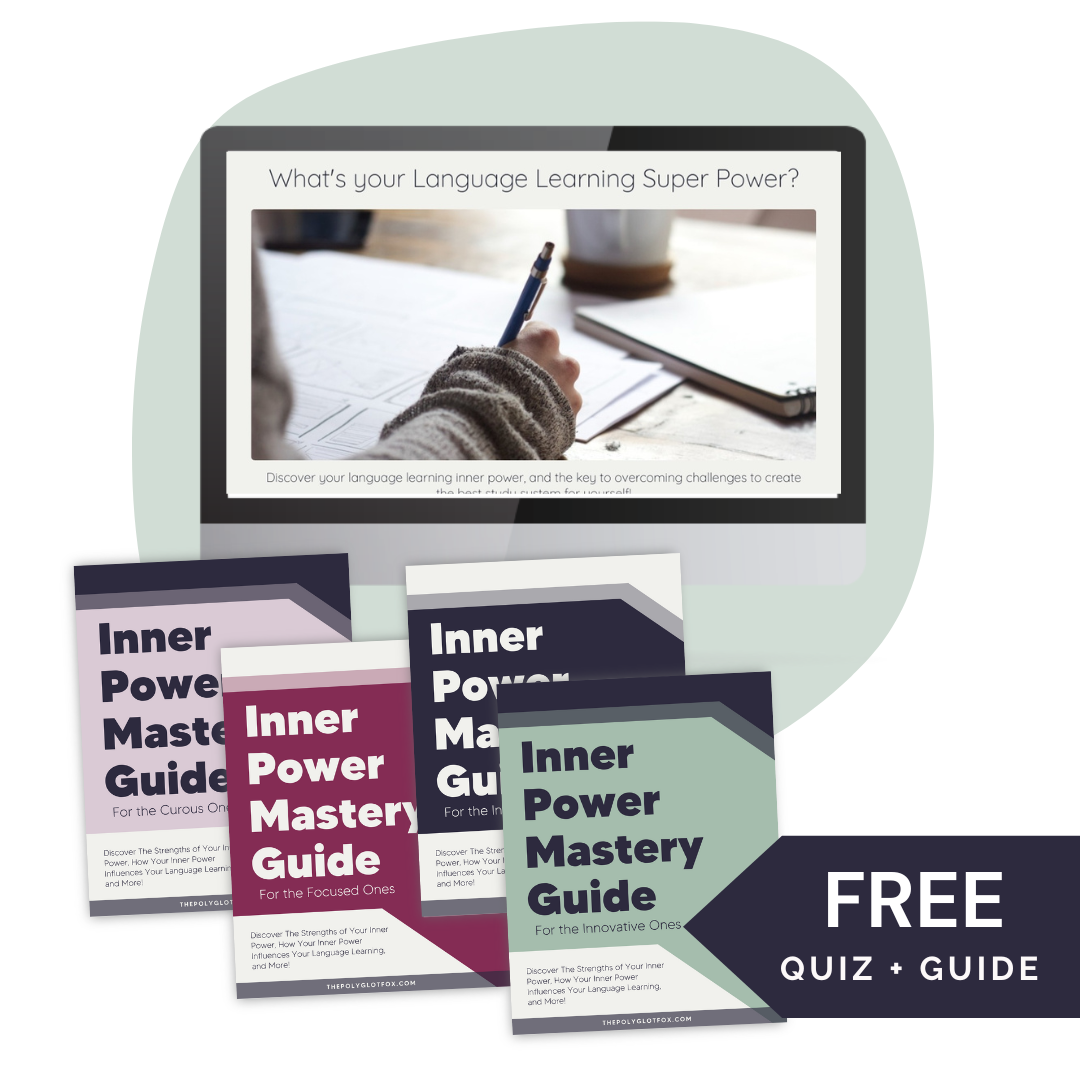


Subscribe to my Polyglot Insights Newsletter + receive resources, recommendations, and tips on consistent language learning and learning multiple languages as an Introvert & Perfectionist~
FOR SUPPORT ISSUES OR QUESTIONS, PLEASE EMAIL AT SUPPORT@THEPOLYGLOTFOX.COM
©2021–{this year} THE POLYGLOT FOX LLC • PRIVACY POLICY • RETURN POLICY • TERMS + CONDITIONS